Saturday, December 24, 2016
Wednesday, December 21, 2016
____________________________ 'SLIPSTREAM' __________________________
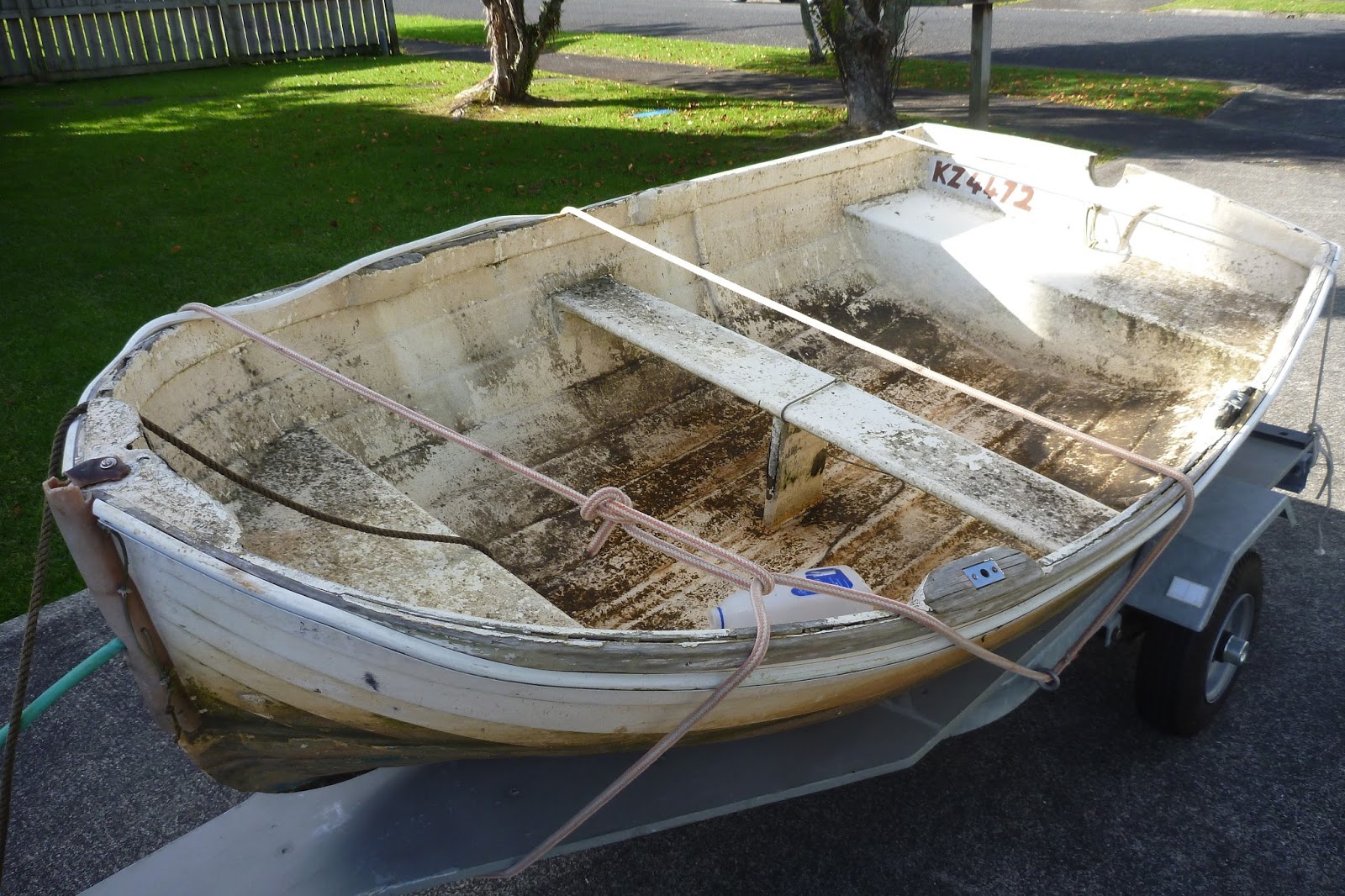
There she was peeping out from the bottom of the boat rack at the Worser Bay Boating Club in Wellington. She is the Zephyr Class sailing dinghy 'Slipstream' which I have just purchased; thus finally settling the choice of a bigger sailing dinghy which has been occupying my thoughts for some time.
The round bilge Zephyr Class is the big sister of my current hard chine Starling sailing dinghy. Both were designed by the talented New Zealand yacht designer Des Townson. There are fleets of Zephyrs all over New Zealand providing plenty of competition. The Zephyr class has become a very popular choice for older sailors, being big enough to provide challenging and exciting sailing, but not so big that older sailors find them exhausting.
The 2018 NZ Zephyr nationals will be held at Worser Bay Boating Club which is a great venue for sailing - I will definitely be a starter.
'Slipstream' is a basic no frills example and will require quite a bit of work to get her up to the standard I would like. I will sail and race her this summer and do the required restoration work over winter.
It was a nice trip south to pick up the boat, being one of those journeys where everything goes right. I managed to drive an uneventful 12 hours non stop to Wellington and stayed with friends in the Stokes Valley just out of Wellington city. The weather was sunny and agreeable and the road dry and safe. I did the drive back to Whangarei over a two day period, completing a round trip of 1600km.
The seller of 'Slipstream' was an affable and engaging semi retired airline pilot. After we had loaded the boat onto my road trailer we did the business over lunch at his house five minutes from the yacht club. With the wheels off the beach trolley everything fitted and tied down well. A slight shortening of the beach trolley wheel base will see the whole outfit fitting well.
I thought the name 'Slipstream' with its aero and hydrodynamic connotations was an appropriately named yacht for an airline pilot and I myself have a nice coincidence with my new boat. 'Slipstreams' sail number is 195. This is the same sail number as my little 'P' Class yacht 'Elusive' that I raced in the National 'P' Class Championships in Wellington in 1968. When I do the Zephyr Nationals in Wellington in 2018 it will be a span of 50 years!
The round bilge Zephyr Class is the big sister of my current hard chine Starling sailing dinghy. Both were designed by the talented New Zealand yacht designer Des Townson. There are fleets of Zephyrs all over New Zealand providing plenty of competition. The Zephyr class has become a very popular choice for older sailors, being big enough to provide challenging and exciting sailing, but not so big that older sailors find them exhausting.
The 2018 NZ Zephyr nationals will be held at Worser Bay Boating Club which is a great venue for sailing - I will definitely be a starter.
'Slipstream' has the Zephyr class emblem painted on her bows.
'Slipstream' is a basic no frills example and will require quite a bit of work to get her up to the standard I would like. I will sail and race her this summer and do the required restoration work over winter.
It was a nice trip south to pick up the boat, being one of those journeys where everything goes right. I managed to drive an uneventful 12 hours non stop to Wellington and stayed with friends in the Stokes Valley just out of Wellington city. The weather was sunny and agreeable and the road dry and safe. I did the drive back to Whangarei over a two day period, completing a round trip of 1600km.
The seller of 'Slipstream' was an affable and engaging semi retired airline pilot. After we had loaded the boat onto my road trailer we did the business over lunch at his house five minutes from the yacht club. With the wheels off the beach trolley everything fitted and tied down well. A slight shortening of the beach trolley wheel base will see the whole outfit fitting well.
I thought the name 'Slipstream' with its aero and hydrodynamic connotations was an appropriately named yacht for an airline pilot and I myself have a nice coincidence with my new boat. 'Slipstreams' sail number is 195. This is the same sail number as my little 'P' Class yacht 'Elusive' that I raced in the National 'P' Class Championships in Wellington in 1968. When I do the Zephyr Nationals in Wellington in 2018 it will be a span of 50 years!
Zephyr 195 - 'Slipstream'
P Class 195 - 'Elusive'
Tuesday, December 6, 2016
______________________ MARINERS DINGHY ? (12) ______________________
By installing a centre board and a sail I am transforming the dinghy from a simple yacht tender to a small boat in her own right. Should she continue to be called 'Mariners Dinghy' ? or should I give her a name ? ....... which reminds me; I have a list of names for the restored Starling dinghy, but to date I haven't given her a name - ye salt laden sea gods, that's almost as unlucky as sailing on Friday the 13th or forgetting to give the crew their rum ration!!
Sunday, December 4, 2016
___________________________ GEZELLIGHEID ______________________
Monday, November 21, 2016
______________________ MARINER'S DINGHY (11) _______________________
I spent some time thinking through the construction of the centreboard case. It's a job that needs to be done once and done correctly. I don't want it to leak or to be susceptible to failure due to flimsy construction - so I have made it pretty robust.
It was good to use my heavy workbench during completion work on the centreboard seat. The workbench now has a new and renewable plywood top and a new metalworking vise. This vise has come in very useful and makes redundant my usual dodge of putting steel fittings etc into (and often damaging) the soft wooden jaws of a woodwork vise.
I made a slight mistake with the length of the centreboard seat but solved this by gluing an extra piece of wood around the perimeter of the seat. The new arrangement is more in proportion with the overall look and I am happy with the way it looks.
We have come a long way since bringing Mariners dinghy home for a repair and repaint to the current stage of the whimsical decision to turn the dinghy into a little lugsail rigged sailing dinghy and I am very happy about how it's all turning out. The speed of progress is a little slow - but shipmates, us retired blokes need time just shooting the breeze as much as we need time building and preparing to go sailing in it.
Friday, November 18, 2016
_____________________ AN ANTIQUE SOUND SYSTEM _________________
In recent times cell phones and other small devices have been invented that will store and play a zillion soundtracks downloaded from the internet. There is something very useful about stereo phonic sound that you can put in your shirt pocket............ the trouble is what do you do with all the old technology? Well this bloke has installed his antique (or is that classic?) technology in his work shed.
Only three of the original five speakers still work, but luckily they are the two main speakers and the centre speaker. I have mounted the centre speaker above the window and one of the main speakers high up in one corner of the workshop. The two small rear speakers won't be missed.
The other main speaker is at the opposite side of the shed along with my set of classical music tapes. These 'Tape Recordings' are an old system which records music onto spools of magnetic tape. Tapes superseded an even older complicated system where music was transferred from a metallic 'die' onto circular black plastic discs of varying sizes. The music was then picked up and relayed to speakers by an armature with a 'needle' on it which picked up the sound from grooves on the black disc ( I kid you not !!!!!!).
I do have a set of what's called 'CDs' (A more recent invention) which you may have heard of. I rotate these with my classical music tapes. When I want to listen to old popular music I listen to 'Coast FM' which plays all the old classic pop songs from the 1960s, 70s and 80s. If I wanted to raise my blood pressure for fun I listen to talk back radio.
It's nice to work away in the carport and listen to music. It's not something that I have done a lot of over the years. As a teacher for over 40 years I found that when I got home from work the last thing I wanted was noise of any sort. So it's nice to have the time now to catch up a bit.
Sunday, November 13, 2016
____________________________ MEDITATION ___________________________
Deliberately, I have never had a dedicated meditation room. My thoughts have been that if I just meditated around the house in a peaceful place where I wouldn’t be interrupted for 15 - 30 minutes then I would become adapted to meditating just about anywhere, and this has pretty much proved to be so.
But lately I have taken to meditating in my small ‘Can’t swing even a small cat’ workshop. It’s cosy and cave like and I am surrounded by simple familiar tools and the happy memories of boat construction projects and modifications.
My simple blue topped meditation stool is almost as old as I am being an heirloom from the family home of sixty years ago. It’s monetary value is about NZ$10 but of course it is priceless. I remember sitting having meals on this stool from the age of five. The block of wood in front of the stool raises my upper legs so that they are parallel with the floor. The lack of a back rest on the stool means I have to sit without support and keep my spine nice and straight.
This morning when I arrived early, dressed in my boat working clothes I liked the familiar smell of wood shavings. Fifteen minutes meditation was a nice way to start the days work. This evening the setting sun shone through the window warming my back as I concluded the day with another fifteen minutes.
My meditation is pretty simple really. It consists of concentrating on my breathing and letting go of the endless chatter of the mind. It’s called ‘Calm Abiding’ meditation. I like the words ‘ Calm Abiding' and I like meditating here in my little room.
Saturday, November 12, 2016
_____________________ DEMOCRACY TRUMPS ITSELF __________________
THE SECOND COMING - W. B. YEATS
Turning and turning in the widening gyre
The falcon cannot hear the falconer
Things fall apart; the centre cannot hold;
Mere anarchy is loosed upon the world,
The blood-dimmed tide is loosed, and everywhere
The ceremony of innocence is drowned;
The best lack all conviction, while the worst
Are full of passionate intensity.
Surely some revelation is at hand;
Surely the Second Coming is at hand.
The Second Coming! Hardly are those words out
When a vast image out of Spiritus Mundi
Troubles my sight: somewhere in sands of the desert
A shape with lion body and the head of a man,
A gaze blank and pitiless as the sun,
Is moving its slow thighs, while all about it
Reel shadows of the indigant desert birds.
The darkness drops again; but now I know
That twenty centuries of stony sleep
Were vexed to nightmare by a rocking cradle,
And what rough beast, its hour come round at last,
Slouches towards Bethlehem to be born?
Friday, November 11, 2016
____ YOU DON'T JUST HAVE TO BE AN OPTIMIST TO SAIL IN 30 KNOTS ____
Practising in marginal conditions increases a sailors skill and safety on the water.
(Optimist sailing dinghy enjoying some rugged weather)
Last week I arrived at the yacht club punching the air with 25 knot optimism and very eager to race my boat. I had been watching the weather forecast and this was going to be my day again! Twenty five knots and increasing! But the sailing for that evening was cancelled.
I know why it was cancelled and fully support the people who made the decision. With an evening race series the light is slowly fading. The lee shore in the strong SW wind was rocky with only a couple of small beach landings, but more importantly there was only one boat, the start boat, available with a crew. There was no dedicated pick up boat in case of capsizes to help crews requiring assistance. So the decision to cancel was wise and sensible - good seamanship.
But, if a dedicated pickup boat had been available I would have strongly argued for racing to take place, even if it had been blowing harder than it was. It is in these marginal conditions that much is learned. If you don't sail in near storm conditions and get used to how it feels and how to handle your boat then you are unprepared if for any reason you get caught out when the weather changes for the worse ........ and the weather, particularly in New Zealand, can change very rapidly indeed.
I can remember a time when most small racing dinghies all had a row of reefing points in the their mains'ls. They didn't get used much, but from time to time when the wind was approaching 30 knots a reef was tucked in and young skippers got an exhilarating ride of their lives among the wind and waves. We need this 'can - do' attitude and a couple of reef points in our mains'ls again in our club racing. Of course in marginal conditions it requires a race start boat and one or two fully crewed 'pick up' boats, this is only sensible. But to not allow young sailors the opportunity to take risks, we restrict their ability to grow in confidence, independence and sailing skill. We all need a bit of Cape Hoorn in us every once in a while.
Thursday, November 3, 2016
__________________________ RACING A LASER ________________________
Grant Cooze is the centreboard dinghy racing organiser for the Onerahi Yacht Club a job that he does very well indeed.
Grant is a real inspiration. He is an amputee with one leg. He launches his Laser, takes off his prosthetic leg, ties it to the Lasers beach trolley and then off he goes sailing. Remarkable.
This week my respect for Grants plucky character and sailing skills grew even more. On arrival at the club for the usual evenings race series I got to talking Lasers with a few of the Laser skippers. Grant suggested that we swap boats for the racing. He would sail my smaller Starling and I would have go with his well set up Laser.
It was blowing quite hard. At the risk of becoming too profane let me simply say that Lasers are tricky little beasts.
In the first two races I blew the starts as I became a bit of an uncontrolled menace to the Laser fleet. I got in irons right on the start line, couldn't get the Laser to go about, got tangled up in the ropes, pulled the wrong control lines and pretty much blundered around. In the third race I sorted myself out and won. I am pleased about this win because the idea of a bigger boat has been an issue for some time, meaning that if I bought one of these boats there is a chance that I might be reasonably competitive.
Sailing back to the clubhouse after the racing I reflected on just how demanding and tricky sailing a Laser is. They are not docile boats, especially downwind in a big breeze. They respond instantly, accelerating very fast in wind gusts requiring balance, skill and a certain amount of good luck to keep them upright and sailing fast. Sailing upwind in strong winds they need sustained hiking to keep them flat and sailing fast and they are very sensitive to any sail control adjustments. They are not a boat for the faint hearted ......... which brings me back to Grant. How the hell he sails his Laser so well I really don't know - he's a bloody legend.
Friday, October 21, 2016
_____________________________ MARINER ____________________________
Mariner at speed, full mains'l and No 1 working jib.
Thursday, October 20, 2016
______________________ MARINER'S DINGHY (10) _______________________
The side seats and the rowlock blocks have all been fitted, glued and screwed.
The G - clamps and timbers are the beginnings of the centreboard case.
To do list:
Centreboard case
Mast step
Fit floorboards
Tiller, rudder and centreboard
Mast, boom, gaff, sail
Painting
Monday, October 17, 2016
_________________________ Delivery Trip (2) ___________________________
West Haven Marina in Auckland and loading up Davids "Whiting 29" sloop 'Chez Nous' for the delivery trip to Tutukaka, approximately 100 nautical miles north of Auckland NZ.
The three likely lads. From the left - Rama, David and moi. I forget what we were laughing about but the photo is a good symbol of a happy trip.
Even on a grey, rainy late Autumn day there is always something out and about on the Waitamata harbour. This is the Auckland Maritime Museums scow 'Ted Ashby' out on a jaunt.
Hard on the wind heading towards Tiri Passage on the way to our first stop, Kawau Island. It was cold and rainy with poor visibility, the wind Westerly slowly turning during the day to NW at 25 knots.
As we fiddled around trying to get the electronic speedo to work and commenting on the underwater impeller - sender unit etc the speedo suddenly came to life. Rama said something to the effect that ' A dolphin must have fixed it' - a curious thing to say I guess - but, right after the word "it" (I kid you not) a dolphin suddenly surfaced briefly right beside the boat. It was so close you could have reached out and touched it. I wasn't quick enough to get a photo of it, but I did get this photo of the pod of dolphins accompanying our speedometer fixer. I find these kinds of coincidences very intriguing.
First stop, Bon Accord Harbour on Kawau Island. We had a restful night in this quiet little bay and started north the next morning. We were waiting for the predicted SW wind, a favourable wind that would give us a fast trip north. We left not knowing exactly what the wind direction would be, as it was hard to tell in our sheltered anchorage. The forecast was for a Nor' westerly which might have meant we could lay up the coast, putting in a few tacks as we went. When we poked our noses out into the big blue sea we were met with a 35 knot Northerly right on the nose combined with a big left over swell from the NE. After bashing and banging around for about an hour I suggested to David that we go back to Kawau and wait overnight for the predicted SW winds, which we did.
The camaraderie that night included playing cards, drinking and talking bollocks; pretty familiar, traditional blokey fare - nothing excessive, but somehow, something that is at the heart of things.
'Chez Nous' has a fractional rig with a large mains'l. As the wind increased we took in three reefs. This reduced the sail area by about 20 - 30% and moved the centre of effort forwards making her easier on the helm. Taranga Island slips past. This Island is also known as "The Hen" being the biggest Island in this group named 'The Hen and Chickens'.
Bream Head, marking the entrance to Whangarei Harbour comes into view. Our destination Tutukaka on the horizon.
If you look carefully in the foreground of the above photo just behind the large tanker you will see one of two small jet skis that passed us going south at a great rate of knots. One of the great constants in life is that no matter where you go you will always run across mad bastards. That's not a condemnation of their behaviour, rather it's an accurate description of it.
This was the only other yacht we saw. She's looked about 50 feet long and was tracking well with a reefed main and a small jib.
The entrance to the Tutukawa marina. David lives in the apartment complex in the background, so his new boat is nice and handy.
"Home is the sailor, home from the sea" - 'Chez Nous' safely delivered to her new place of residence - job done.
The three likely lads. From the left - Rama, David and moi. I forget what we were laughing about but the photo is a good symbol of a happy trip.
Even on a grey, rainy late Autumn day there is always something out and about on the Waitamata harbour. This is the Auckland Maritime Museums scow 'Ted Ashby' out on a jaunt.
Hard on the wind heading towards Tiri Passage on the way to our first stop, Kawau Island. It was cold and rainy with poor visibility, the wind Westerly slowly turning during the day to NW at 25 knots.
As we fiddled around trying to get the electronic speedo to work and commenting on the underwater impeller - sender unit etc the speedo suddenly came to life. Rama said something to the effect that ' A dolphin must have fixed it' - a curious thing to say I guess - but, right after the word "it" (I kid you not) a dolphin suddenly surfaced briefly right beside the boat. It was so close you could have reached out and touched it. I wasn't quick enough to get a photo of it, but I did get this photo of the pod of dolphins accompanying our speedometer fixer. I find these kinds of coincidences very intriguing.
First stop, Bon Accord Harbour on Kawau Island. We had a restful night in this quiet little bay and started north the next morning. We were waiting for the predicted SW wind, a favourable wind that would give us a fast trip north. We left not knowing exactly what the wind direction would be, as it was hard to tell in our sheltered anchorage. The forecast was for a Nor' westerly which might have meant we could lay up the coast, putting in a few tacks as we went. When we poked our noses out into the big blue sea we were met with a 35 knot Northerly right on the nose combined with a big left over swell from the NE. After bashing and banging around for about an hour I suggested to David that we go back to Kawau and wait overnight for the predicted SW winds, which we did.
The camaraderie that night included playing cards, drinking and talking bollocks; pretty familiar, traditional blokey fare - nothing excessive, but somehow, something that is at the heart of things.
The next day we left for the north with the South Westerly filling in with a vengeance. The lesson to be learned is that it is always best to be prudent and wait out bad conditions if you can. In the old great days of sail, coastal sailing vessels could be seen en mass, at anchor, awaiting a fair wind. To do so is common sense and good seamanship.
The SW fair wind that we patiently waited for meant that we could sail most of the day with the sheets eased a bit and that we were able to sail the whole distance without tacking at all.
'Chez Nous' has a fractional rig with a large mains'l. As the wind increased we took in three reefs. This reduced the sail area by about 20 - 30% and moved the centre of effort forwards making her easier on the helm. Taranga Island slips past. This Island is also known as "The Hen" being the biggest Island in this group named 'The Hen and Chickens'.
Bream Head, marking the entrance to Whangarei Harbour comes into view. Our destination Tutukaka on the horizon.
The speedo spent most of its time registering between 7 and 7. 5 knots for the duration of the trip.
If you look carefully in the foreground of the above photo just behind the large tanker you will see one of two small jet skis that passed us going south at a great rate of knots. One of the great constants in life is that no matter where you go you will always run across mad bastards. That's not a condemnation of their behaviour, rather it's an accurate description of it.
This was the only other yacht we saw. She's looked about 50 feet long and was tracking well with a reefed main and a small jib.
The familiar and distinctive ' Three Gables' of the Tutukawa headland.
"Home is the sailor, home from the sea" - 'Chez Nous' safely delivered to her new place of residence - job done.
Sunday, October 16, 2016
_________________________ DELIVERY TRIP _________________________
Mains'l well reefed as Sail Rock with Taranga Island to port slide past - three quarters of the distance completed.
Today I arrived back from a hair raising (and spray drenched) three day delivery trip from Auckland to Tutukaka in Northland New Zealand. I was crewing for my good mate David who is now the proud owner of a Paul Whiting designed 'Whiting 29' class sloop. It was an interesting and sobering experience (despite a bottle of rum etc that was consumed). More of the trip on my next posting.............................
Wednesday, October 12, 2016
___________________ SORTING THE WORKBENCH (4) ___________________
I thought I had it sorted ............................
While working on my workbench I remembered something that was mentioned in one of the books. It was stated that many woodworkers like open free standing workbenches without any shelves, because shelves inevitably are places that get covered in wood shavings and dust. I have found this to be true.
So the other day after yet again sweeping away the detritus that covered the shelves I decided to knock up a couple of doors - and this is the result. Rough and ready to be sure but they should do an excellent job of keeping the shelves free of the by-products of wood work. The doors are slightly ajar as I have just applied the first of two finishing coats of paint.
It's always been a tradition in my family that boat builders benches should be christened in a similar manner to a newly launched yacht. That is, a little alcohol is poured over the bow and the rest of the bottle finished off by the builder (Actually that's not true, I just made it up - but it sounds like a good tradition to start) - now where's that 'Good on yah mate, Speights Pride of the South NZ beer.'
Monday, October 3, 2016
_________________ FINDING BEAUTY IN THE ORDINARY _________________
Something that NZ artist Dick Frizell (above) said resonated with me. It resonated with me because it is something I have known for a long, long time. It is something that is true. It is something that is part of my everyday experience. I think many people would agree with this way of seeing.
I cannot quote him exactly but the general thread of what Dick Frizell was saying goes like this: Beauty is not exclusively contained in grand vistas, exotic locations and magnificent sunsets. It is, as he explained contained ' In a picture of a letterbox and its night time moon shadows on an ordinary suburban street. Everything is beautiful.'

This is what I was trying to get at with my recent post "In Praise of Weeds." Who makes the rules? Who says some plants are weeds and other plants are valuable flowers to be oohed and ahhed over? The green of my Oxalis weeds are not just green, they are a beautiful emerald green.
The plant police with their personal projections of plant devilry will claim that left to their own sly inclinations (i.e. successful, healthy, vibrant growth) Oxalis will take over the world in the same way that other devil plants such as Kikuyu grass are plotting to do (And plotting incidentally in the same way as forests of Oak and Kauri, oceans of Tulips and Iris's and meadows of daffodils and buttercups).
Well, I humbly beg to differ. In my way of looking at the world...... Oxalis, Kikuyu and other varieties of Devilish Greenis Vegetais Weedus are just as interesting and beautiful as anything else that grows on this planet.
As evidence for the proposition that beauty is everywhere in everyday things, let me present to you some of the objects that I have been working on in my own leisurely way as I restore a rather ordinary and common fiberglass dinghy.
The agricultural carpentry (mine) of a simple workbench with all its rough, rude, uneven symmetry.
Simple honest hand tools that with good intentions become tools of transformation.
The fruits of manual boat building labour - the rudimentary shaping of the dinghies new rowlock blocks and the by product of the shaping - a carpet of lovely curled shavings from the wood plane.
I spend a lot of time just standing at the side of this old dinghy, just looking and thinking about the next step in this project. I never tire of looking at the beauty of it all. It's a privilege to have the time, the inclination and the rudimentary skills to be able to be involved in something that is .... well .... without wanting to put too finer point on it ...... pure joy.........
.......... so I guess I am giving thanks here, not just for being able to engage with this work and finding joy in the immediacy of something worthwhile, but also (As Dick Frizell points out ) in the beauty that is to be found in its ordinariness ....... and using a bit of good old fashioned mindfulness helps here.
I also give thanks for wonderful, modern, gap filling epoxy glue LOL.
Thursday, September 29, 2016
____________ KAYAKS, POHUTAKAWAS AND AN UMBRELLA _____________
Today I went kayaking with my brother Tony. The aim was to enjoy some kayaking again after a rainy and cold winter and to inspect the Pohutakawas trees that my good friend Gerry had planted and asked me to keep an eye on because he was relocating to Wellington.
The 21 small, newly planted Pohutakawa trees ( right foreground) were generally doing very well indeed and were thriving after a winter that had come with a few pretty ferocious storms. One had died and one is looking a bit worse for wear, but the rest are doing well. This is the third time I have checked on them since they were planted at the beginning of the year. Two of the previous visits were to apply fertilizer. This trip I weeded some of the planting sites that had become inundated with weeds, completely enveloping some of the trees. I will go back again soon to complete this work.
With a fast incoming tide only half way in, a first circumnavigation of Rat Island was cut off by a rapidly disappearing section of sand. There was only one thing to do - some good old fashioned portaging. I like the word portage, it reminds me of stories I used to read about the exploits of North American Indians and their adventures in the wilds of the USA and Canada. In the stories I read as a youngster they were always portaging their bark canoes from one lake to another as they traversed the wilderness hunting, foraging and exploring.
So my brother and I, two guiltily overweight old age pensioners (and both recipients of quadruple heart bypass surgeries) had a go at portaging. It's hard work. We stopped frequently, discovered again that the rear end of the kayaks are much heavier at one end - the stern - and took turns in this position as we portaged them one at a time across a strip of sand that ended up being a lot longer than it looked.
Three quarters of the way across and time to have a discussion about whose idea it was to portage across this strip of sand. We could have sat in the middle of the sand in our kayaks and waited for the tide to come in, but, call me old fashioned - once a couple of pensioners have made a portage commitment they are not apt to give up easily.
The last stretch of sand. My kayak is sitting waiting on the horizon.
On the run back to the launching ramp Tony produced his 'piece de resistance', a medium sized umbrella which pushed his kayak along at the rate of a steady paddle pace. I had forgotten this trick of his with the umbrella and wasn't equipped in a similar manner - bugger.
Back at the launching ramp and loading up the boats. When we got home we drank some 'Spieghts - Pride of the South' beer and talked portaging with arms so yanked in their sockets it was hard to lift the beer cans to our lips.
I will have to email Gerry and send him some photos showing how well his beloved Pohutakawas are doing.
Subscribe to:
Posts (Atom)