The graphic artist Maurits Cornelis Escher said:
“We adore chaos because we love to produce order.”
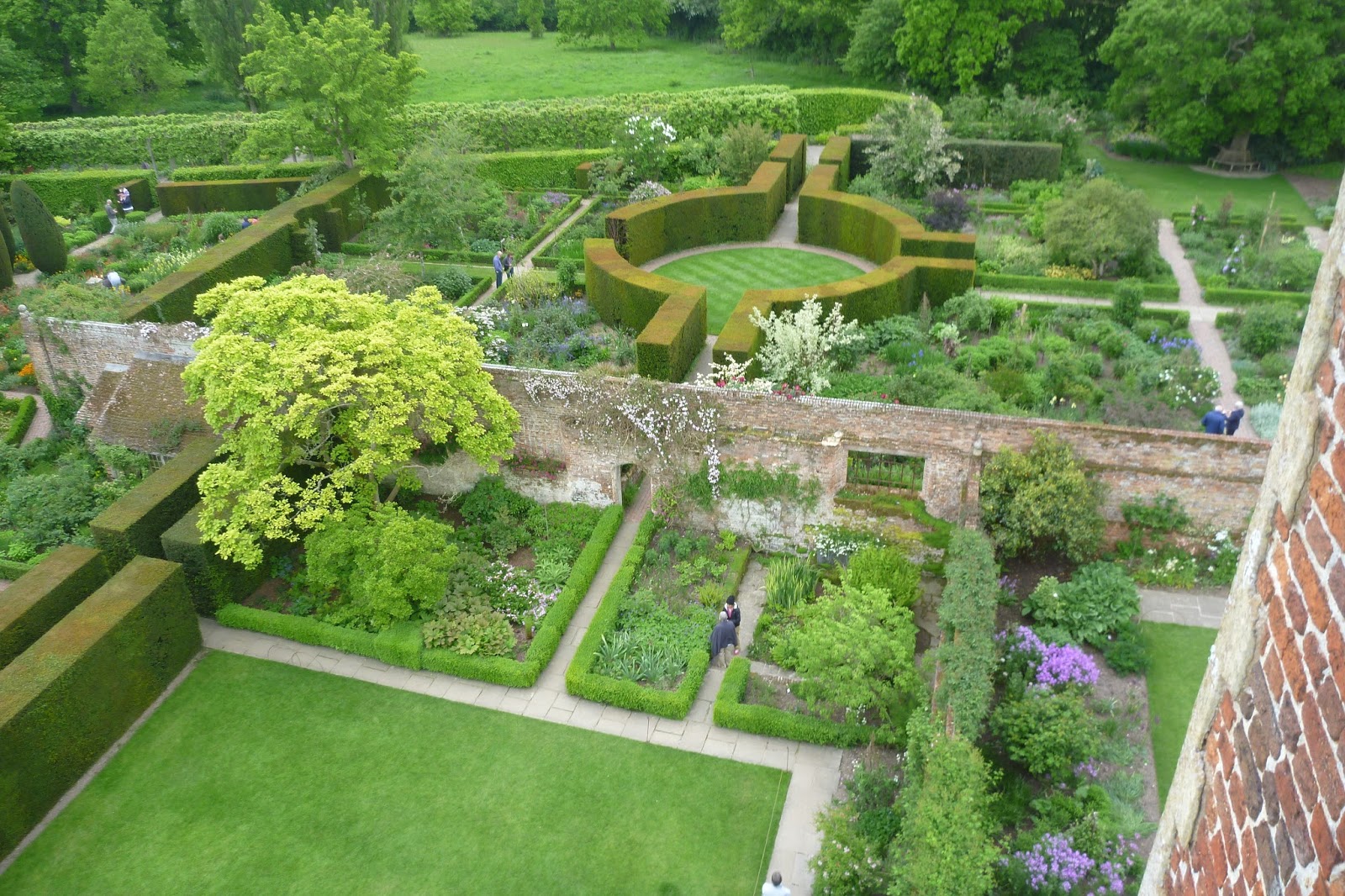
At Great Dixter Gardens I saw chaos and order together in a wonderful living paradox.
'Great Dixter is a house in Northiam, East Sussex, England. It was built in 1910–12 by architect Edwin Lutyens, who combined an existing mid-15th century house on the site with a similar structure brought from Benenden, Kent, together with his own additions. It is a Grade I listed building. The garden, widely known for its continuous tradition of sophisticated plantsmanship, is Grade I listed in the National Register of Historic Parks and Gardens.
The original Northiam house, known as Dixter, dating from the mid-15th
century, was acquired by a businessman named Nathaniel Lloyd in 1909. He
had a 16th-century house in a similar style moved from Kent and the two
were combined with new work by Lutyens to create a much larger house,
which was rechristened Great Dixter. It is a romantic recreation of a
medieval manor house, complete with great hall, parlour, solar and
yeoman's hall.

Lloyd and Lutyens began the garden at Great Dixter, but it was
Lloyd's son Christopher Lloyd, a well known garden writer and television
personality, who made it famous. The garden is in the arts and crafts
style, and features topiary, a long border, an orchard and a wild flower
meadow. The planting is profuse, yet structured, and has featured many
bold experiments of form, colour and combination. The garden is
currently managed by Fergus Garrett, who worked closely with Lloyd up
until his death in 2006 as Head Gardener and introduced a number of
innovations into the planting scheme.'

I am very much a non gardener, so it is difficult to make a lot of informed technical comments regarding the finer points of what I saw. But
as the great gardening expedition rolled on I got to appreciate and know
a little more. I liked Great Dixter a lot. Its pattern of plantings
seemed more relaxed and less formal than say Hidcote Manor. There was a
feeling of abundance and plenitude. Radiant chaos. A celebration of colour.
Large clusters of plantings in pots provided inspiration for our own garden.
Paths, hedges, walls and the vibrancy of the flowers made each garden room a place of intimacy and wonder.
Clusters of terracotta pots alive with various contrasting foliage added interest and delight.
On the left the old baronial hall, to the left the Oast house and the old barn.
An archway through a well manicured hedge entices you on as you explore.
Topiary lived alongside generous flower beds.
I was quite taken by this new garden seat and took a number of photographs. I liked its chunky simple lines and no nonsense design. When I have the time I am going to build one.
Box hedges planted among the flower gardens.
Agricultural students from all over the world come to Great Dixter to work. Here some of them were gathering some cacti for a display.
The sunken garden with its pond by the old barn.
"Meadow Gardens" were a feature of some of the gardens we visited. These are areas of grass or wilderness left to grow in their natural state.
There was something slightly Wind in the Willows - Toad Hallish about the buildings. If I had come across Toad, Ratty, Mole and Badger strolling together in the grounds, or if I had seen a very large motor car with Toad behind the steering wheel careering up to the old Manor I wouldn't have been the least bit surprised!
Having a meadow garden I guess means less weeding?
A beautiful cluster of pots around the entrance to the main hall.
The painter Harlan Hubbard writing in a quiet book of a quiet, contemplative life wrote:
" The slanting sun is warm, the sky above the tawny earth is of deepest blue. The gardener harvests much that was never planted"
As a builder of boats, I understand this. In my opinion this is the deeper meaning of the gardens that we viewed. Both the tangible and intangible insights of the journey of creation are as important as that which is created.


 Sea, sky, mountains, rivers, clouds, mist, valleys of golden tussock waving in the wind. All of these primal elements are amplified in these southern lands. This creates a perspective, a space for contemplating ones place in the scheme of things. It's a place to return to again and again.