Tuesday, March 15, 2016

_______________________ KAYAKING IN COMPANY ______________________

 Today I went for a paddle with my older brother Tony as he took his new 'ride on'  "Prowler" brand Kayak on it's maiden voyage.

 In an area off the Portland channel we found a break in the mangroves and went exploring.

 We thought we might break through to another part of the harbour but were finally thwarted my a wall of mangrove trees.
 
 So it was back to 'Pohutakawa Beach' (See three posts back, March 10th) for some lunch. (This time landing was easier as the tide was in).

Tony is pretty pleased with his new kayak. It's stable and slips along nicely. We are already planning our next trip.

Monday, March 14, 2016

___________________ WE CAN DO BETTER THAN THIS __________________

TWENTY LANES? Are these motorway planners mad? Nahhhhh, the roads are just far to small. Let's build something that will really deal to the traffic. Hmmmmm, let me think; I know! fifty lanes!! That should solve it!


Here's FIFTY LANES with everyone returning from their holidays. Some people were trapped for 5 days in this traffic jam. The solution? First we have to create a paradigm shift in peoples thinking. Do we expect roads to make a profit ? No. Generally they are funded out of taxation, they are an economic and social infrastructural cost.

If we applied this thinking of the 'NON PROFIT ROAD' and provided fast, clean, cheap public transport combined with a high toll on the use of private motor vehicles on main arterial routes without expecting public transport to make a profit we would solve the problem.

WE NEED TO THINK OF PUBLIC TRANSPORT AS A MOVING ROAD

WE DON'T EXPECT ROADS TO MAKE A PROFIT, ROADS ARE A COST

 PUBLIC TRANSPORT IS A MOVING ROAD

The benefits? Take a look at the above photographs again. In every city in the world where there is fast, cheap, safe, clean, efficient and convenient public transport - the public use it. This topic is one of my ranting hobby horses and I have been ranting about this for decades.


Thursday, March 10, 2016

_______________________ FIFTEEN POHUTUKAWAS _____________________

My good friend Gerry, an active conservationist was lamenting the fact a couple of days ago that he wouldn't be here in Whangarei to look after fifteen Pohutakawa trees that he had planted earlier in the year as he was moving to Wellington to be closer to family. After inquiring as to what 'looking after' entailed I offered to take on the job of keeping an eye on his planting and removing any ingress and swamping of the trees by the surrounding Kikuyu grass. I wasn't able to go with him yesterday as he did his last feeding of the trees with manure but today I took a paddle to take a look at my new charges. I landed on a long low lying island that was surrounded by mangroves and muddy channels.

The high ground across the channel behind my kayak is Limestone Island which is now a reserve and has been planted over the years by volunteers (myself included). There are Kiwi, Geckoes, Wetas and a wide range of other endangered flora and fauna on the island.

This is what greeted me as I approached the beach. It is one of many bait stations that is part of a strategy to keep Limestone Island predator free. There are similar bait stations on all the other low lying areas close to Limestone Island and on the Island itself. The fact is rats, stoats and weasels are quite capable of swimming across the short channels that surround Limestone Island and creating havoc to the bird life - especially Kiwi.

This is one of the brand new Pohutukawas that have been planted. My job will be to visited this area a few times a year to clear the Kikuyu away from the trees until they are big enough not to get inundated and overwhelmed by this hardy and quick growing grass.

The large piece of driftwood in the background show that this low lying area can be almost under water on king tides or during combinations of high tides and stormy weather.

All the Pohutukawa I looked at were healthy and thriving. This area is ideal habitat for these trees whose roots are adverse to a periodic dunking is salt water, indeed thrive in a salt water marine environment.

Another bait station, this one close to the shore and ready for high winds with a rock on its roof.


The kayak back on top of the car. The area I visited is beyond Portland Channel on the other side  of Limestone Island which is to the left in the above photograph. I paddled back between the island and the mainland (to the right) with a following south west wind. It occurred to me that I could have had a rather pleasant down wind run if I had a sail up. Indeed you can purchase special little kayak sails made especially for this very situation - running downwind with a following wind - must look into that.

Post Script -This orange 'sit on' kayak belongs to my brother. We went and collected it from Kerikeri last week when he won it on a NZ TradeMe auction. Looks like I will have some kayaking company from time to time - that will be nice; he can help me look after the Pohutukawas.


Monday, March 7, 2016

_____________ GARDEN TREASURES (3) - HIDCOTE MANOR _____________

Hidcote Manor Garden is one of the best-known and most influential Arts and Crafts gardens in England.

Hidcote Manor lies in the north Cotswolds at the village of Hidcote Bartrim, near Chipping Campden, Gloucestershire, a stone’s throw from Stratford-upon-Avon.

Created by the talented American horticulturist, Major Lawrence Johnston its colourful and intricately designed outdoor linked ‘rooms’ of hedges, rare trees, shrubs and herbaceous borders are always full of surprises. It is owned by the National Trust and is open to the public.

Exploring the maze of narrow paved pathways you discover secret gardens, magnificent vistas and plants that burst with colour. Many of the plants found growing in the garden were collected from Johnston’s many plant hunting trips to far away places. It’s the perfect place if you’re in need of gardening inspiration.

With this garden being the first garden I have ever visited with any sort of concentrated awareness and singularity of purpose I was entranced by the idea of different 'rooms' often containing different themes of planting and colour.

I have always associated a red brick garden wall providing shelter and a backdrop to planting as being a major feature of an English Cottage Garden. At Hidcote and other large English gardens, a high wall is used to create 'rooms'.

All this water feature needs is a few North Island NZ Snapper or Orange Roughy fish to add a bit of interest, surprise and variety to the garden. When I suggested this to other members of the party the universal agreement was, "Yeah, right" delivered with that distinctive sardonic drawl.

Christine underneath the arches. She thoroughly enjoyed the experience and has put the knowledge gained to good use in our own garden.

Every 'room' contained a surprise of flowers and / or architecturally pruned trees and shrubs.

I loved the poppy garden. It was resplendent with yellow flowers that shone like little suns.

Long verdant grass avenues pulled your eyes towards yet another entrance to another garden room.

I liked the large plantings of broad leafed plants of varying textures and shapes.

Large mature trees provided a kind of cradling complement to the gardens, folding everything within their shade and limbs. These gardens were about intimacy and containment rather than a 'Big Skies Montana' experience.

This beautiful adjacent woodland area alive with dappled light provided a harmonious counterpoint to the large expanse of gardens.

I remember Hidcote with some affection because it was my introduction to appreciating gardens and it was one of the best comparatively speaking. As the Tour progressed we were introduced to many other types of gardens but the quintessential English garden remains my favourite.

The small classic English Cottage Garden is really Hidcote (and many others) 'writ very small' and is something achievable by the amateur gardener working on a small scale in their own back yard.


Sunday, March 6, 2016

_______________ GARDEN TREASURES (2) - SINGAPORE _______________

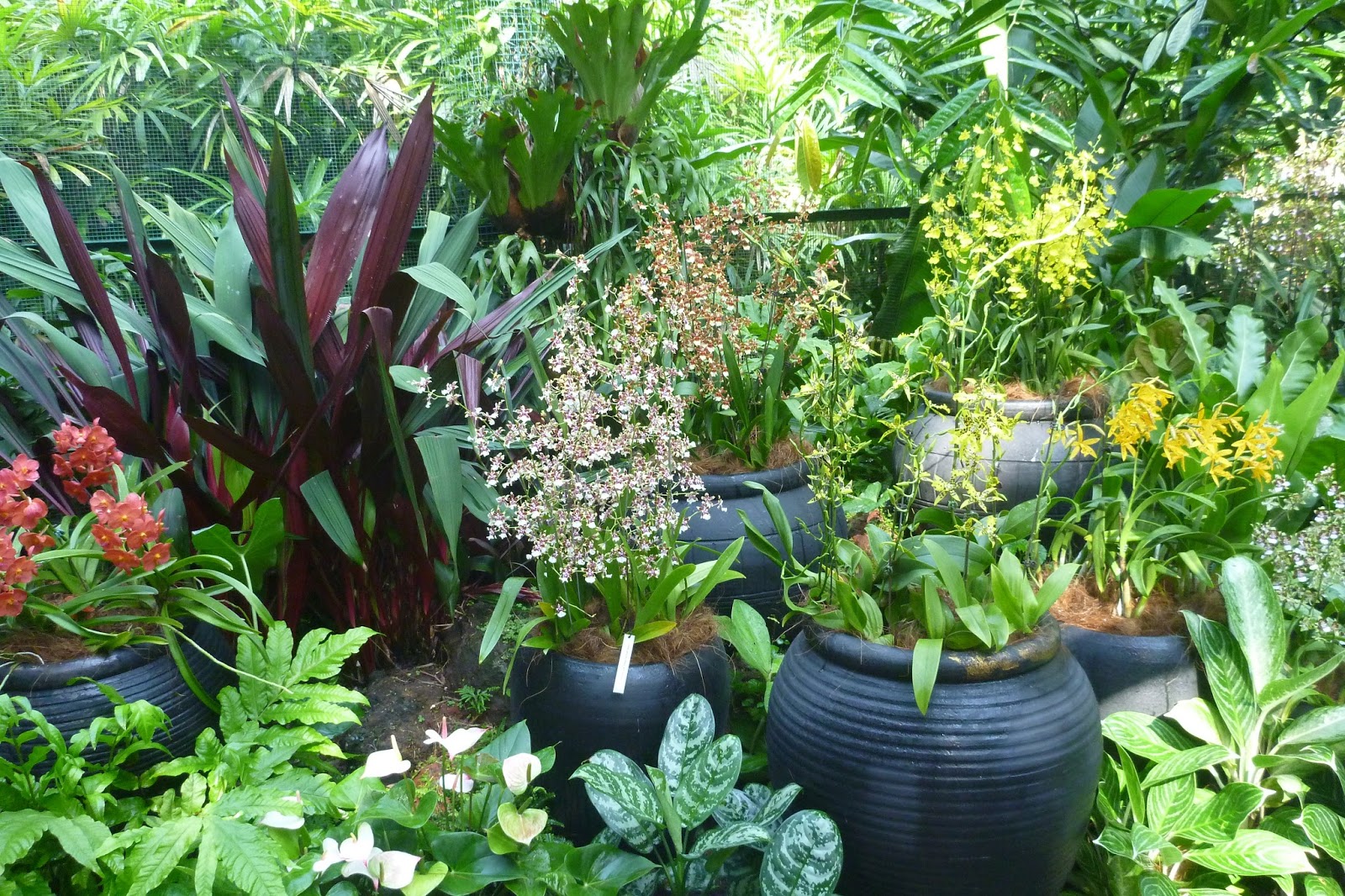
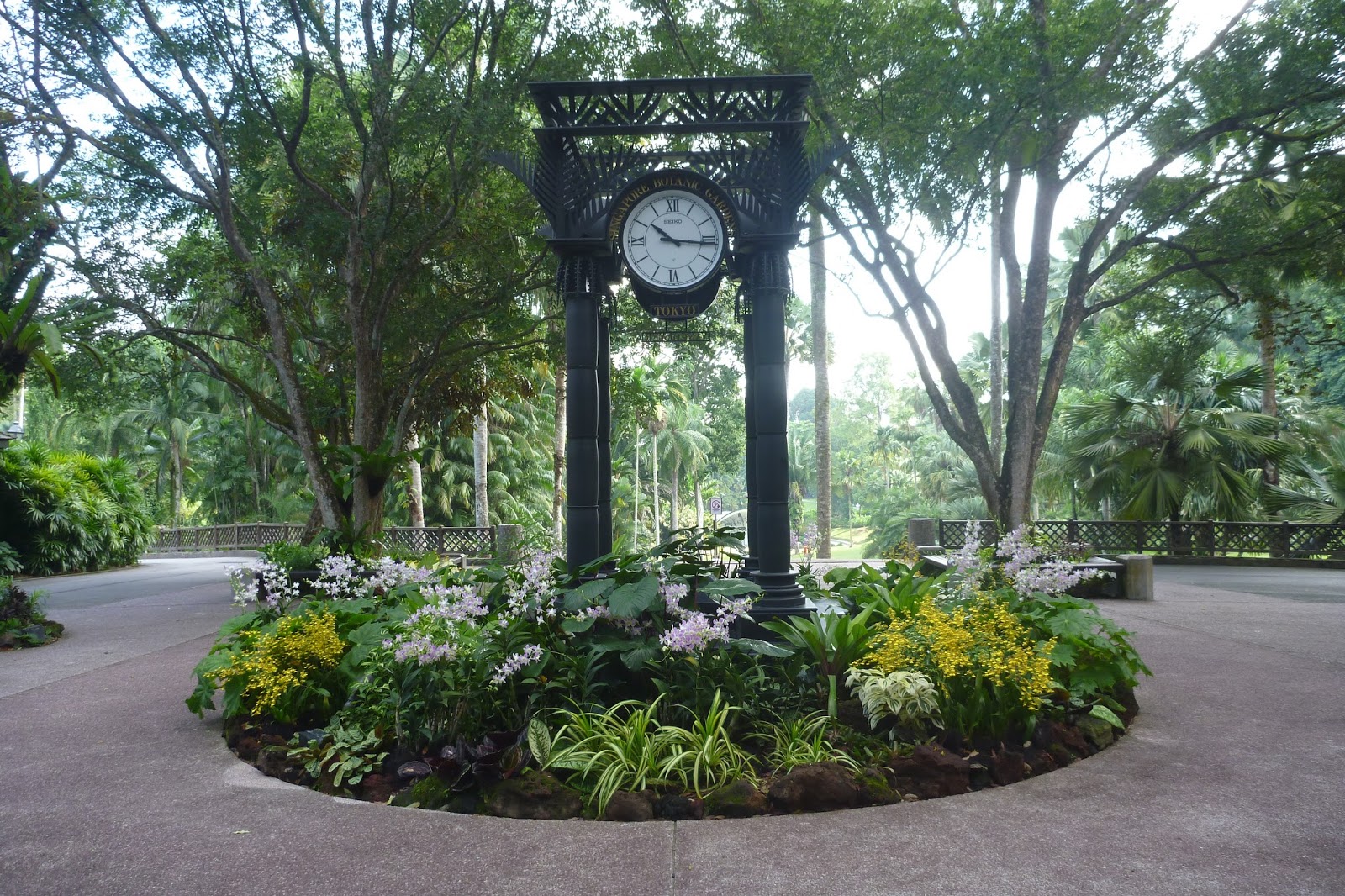
On the way to Europe in 2015 we had a stopover in Singapore. Singapore is contained within a very small land area and is highly developed. This reality is reflected in the  Singapore National Orchid Garden which is planted and manicured within an inch of its life. As the garden only covers a small area of land it is only a short walk to view everything. The garden is well cared for and very beautiful.


Friday, March 4, 2016

_____________________ GARDEN TREASURES (1) _____________________

Gardens at Hever Castle, Kent, UK. Ann Boleyns childhood home.

Shipmates, last year my wife said to me excitedly, "Look at this European Garden Tour, it's very expensive but I really, really, really want to go on this, and... and... and..."  My emphatic answer was:

" No, I have a much better holiday idea that you will love, trust me on this one. If we are going to fly to the other side of the globe it would be great to go sailing on the Norfolk Broads, the Solent, the East Coast area centered around the River Crouch, the Western Isles of Scotland, the Scilly Isles and that's just the UK .... and you will just love visiting as many Maritime Museums stuffed full of historical boats and yachting artifacts as is possible in the time available .... and anyway I really don't like those 'Tour' thingies."

So we went on a European Garden Tour..................... and I really enjoyed it. In fact I was mesmerized by the beauty of the gardens we visited so much that some of this new appreciation spilled over into our own garden when we returned to New Zealand. (Actually calling its former state a garden is a bit of a stretch).

Our new revived garden is built around planter boxes, many small and very large pots, some strategic planting around existing trees and shrubs and the replanting of some small garden areas.

I took the photographs (below) in the UK and throughout Europe. This posting concentrates on large planter pots which have provided some inspiration for our own pot plantings in the new garden.

Hidcote Manor, Gloucestershire, UK. 

 Great Dixter Gardens, Sussex, UK

Sissinghurst , Kent, UK

Chelsea Flower Show 2015, London.

Orvieto, Italy.

Villa Chigi Cetinale, Italy.

Castello di Celsa. Italy.

 Florence, Italy.

Isola Bella, Lake Maggiore, Northern Italy.

 Siena, Italy.

 Monets Garden, Giverney, France.

Hidcote Manor, the first garden we viewed in England - glorious, beautiful, memorable.

I am very glad that I went specifically on a Garden Tour, because it has woken a part of myself that was hiding somewhere. An intense concentration on a single idea and action (Looking at the beauty of flowers) focused my mind and made me look carefully at a part of the world that I guess I had always dismissed, or passed in a rush. The vast majority of the gardens we visited were impossibly, unspeakably, entrancingly stunning. They shone brightly like the sun. I just gawped in open mouthed wonder at the beauty of it all.

Tuesday, March 1, 2016

__________________________ CAT BOATS (4) ___________________________


I am very fussy about what I like in the way of a Cat Boats looks. I don't like the look of some Cat Boats at all. This 22 foot Arey's Pond Cat Boat ticks all the boxes for me. I think the proportions are just right, the profile is great and she looks good from all angles which from my point of view is an important feature. Also she is not too beamy. Catboats have work boat origins and they were often used for fishing and dredging for shellfish. Their great beam not only provided a stable work platform it also gave the boat stability when sailing. But when the beam of some catboats approaches half, or more than half their overall length they start to look somewhat like a squashed circle.

To my eyes this 22' Arey's Pond Cat boat is one of the nicest looking on the Cat walk.